How do GBO Innovation makers and Phoenix 3D Metaal use rubber pad forming for design, efficiency and innovation? Using rubber pad forming in agricultural production creates new opportunities for efficiency, sustainable use of materials and innovative product solutions. From flexible packaging to customised parts: combining industrial design with smart press technology can make agriculture more productive and innovative.
Autonomous tractors, harvesting robots and smart milking robots are not only changing the way farmers work, they are also changing what is required of the machines themselves. Designs must be lighter, more efficient, easier to clean and, at the same time, visually distinctive.
These developments call for design and engineering that look beyond traditional production methods. At GBO, we work together with Phoenix to make this possible using a production technique that combines design freedom with efficiency: rubber pad forming.
GBO Innovation makers, in collaboration with Phoenix 3D Metaal and Peeters Group, developed a new cover for the Pitbull Loader, produced using rubber pad forming.
Rubber pad forming is an innovative production technique in which a metal plate is pressed into a 3D shape under high pressure using a rubber membrane. The process requires only one fixed mould instead of two heavy steel moulds. This means lower tooling costs, faster turnaround times and greater design freedom.
For GBO, rubber pad forming is more than just a production method; it is a design tool. Our designers use the possibilities offered by the process to create strong, expressive and technically sophisticated shapes that perfectly match our customers' identities.
After the concept phase, GBO's engineering team translates the design into a technically feasible product. Our engineers work closely with Phoenix's specialists, who are responsible for technical simulation and the pressing process. Their production expertise, combined with GBO's design and engineering capabilities, ensures a seamless transition from design to production.
Flip Vossen
Designer
"We see rubber pad forming as an extension of design; it gives us the freedom to create fluid, robust shapes without compromising on manufacturability or cost."

Rubber pad forming: VDL ETG CropTeq
Rubber pad forming responds perfectly to this demand. The technique is ideal for small to medium-sized series, where freedom of design, robustness and cost awareness are key considerations.
Typical applications:
Thanks to low tooling costs and short lead times, designs can be validated, modified and scaled up more quickly. This makes the process attractive to OEMs who are constantly innovating in robotisation and agricultural automation.
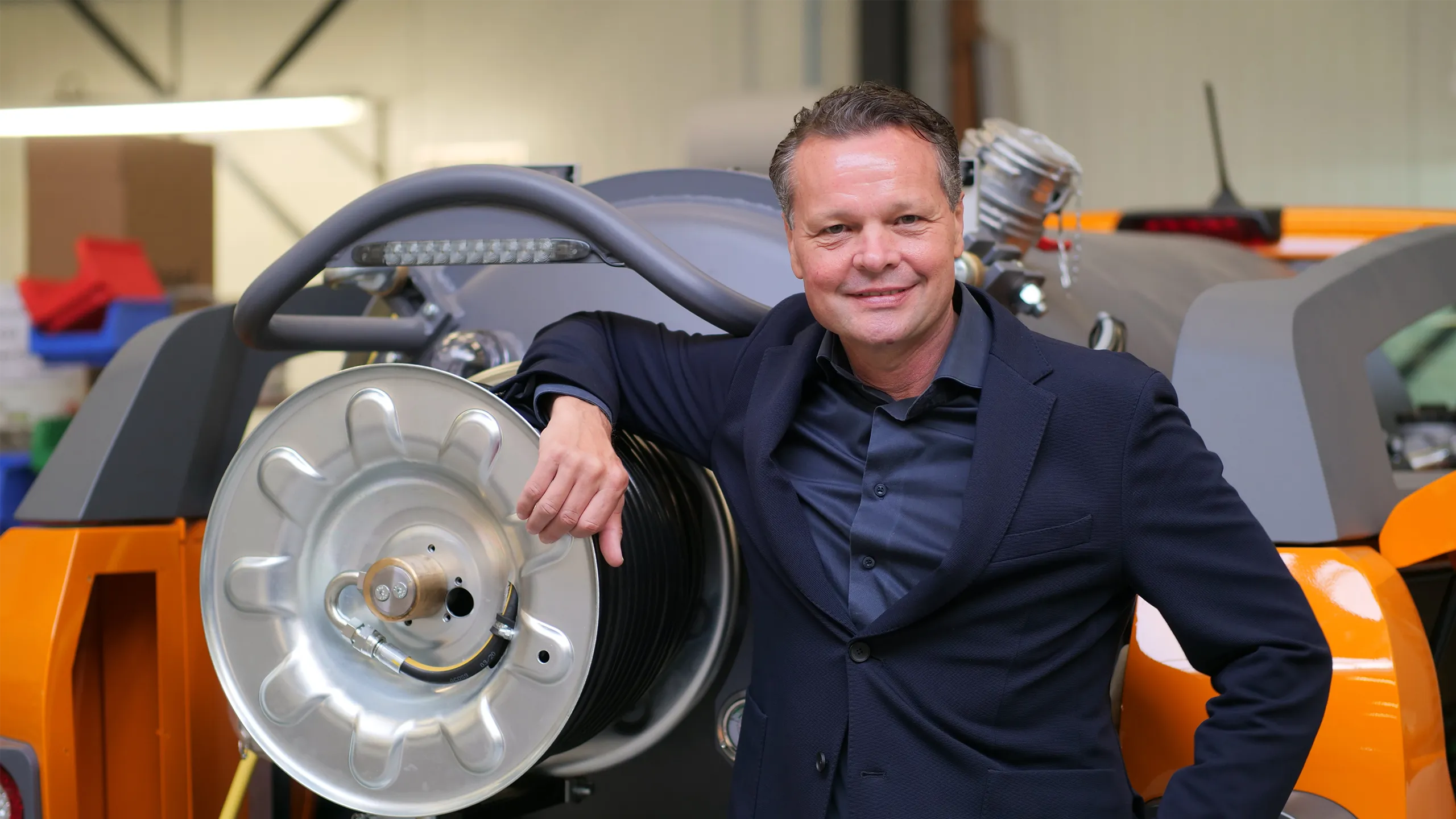
Interview with Jan Pieters, CEO of Rioned: Read more
Rubber pad forming offers design freedom without compromise. At GBO, we use this to develop products in which form and function coincide. No unnecessary welds or assembly parts, but smart integration of functions in a single steel or aluminium part.
The result:
Jacques Gramser
Director/Partner
"Rubber pad forming enables us to develop products with an extremely high degree of rigidity in combination with the intended design. This is truly essential in order to deliver high quality."

Dannie Peters (Peeters Group), Bernard van der Poel (Phoenix 3D Metaal), and Jeroen op ten Berg (GBO Innovation makers) celebrate the successful collaboration on the Pitbull cover.
Curious about how rubber pad forming can enhance your agricultural machinery or robot project? Our designers and engineers are happy to assist you, from the initial sketch to technical realisation.

